

.jpg_1759869177.3989_9564518c87_fullsize.webp)


.jpg_1758051740.5057_0ad83a0b80_fullsize.webp)
Published Mar 16, 2026
28.170K
The Complete Guide to SodaStream America's Leading Sparkling Water Brand
.jpg_1773702330.247_9f7b8e7299_fullsize.jpg)
If you've ever stood in the grocery store aisle staring down a tower of LaCroix cases and silently calculated what you spend on sparkling water every month, you already understand the appeal of SodaStream. The number, for most households, is uncomfortable. A sparkling water habit — two liters a day across a family of four — can quietly drain $800 or more per year, all for the privilege of something that ends up as plastic in a landfill. That math has driven millions of Americans to rethink where their bubbles come from.
SodaStream, the home carbonation brand now owned by PepsiCo, answers that question directly: make your own. Press a button, carbonate your tap water in seconds, skip the store run entirely. It sounds simple because it is. But the brand has evolved into something far more sophisticated than a novelty kitchen gadget, and for anyone trying to understand whether it belongs on their countertop in 2025, a full look at what SodaStream actually offers — the machines, the costs, the sustainability story, and the honest tradeoffs — is exactly what this guide delivers.
What SodaStream Is and How It Works in American Homes
Overview of the SodaStream home carbonation system
SodaStream is a countertop appliance that uses pressurized CO2 to carbonate plain tap water in seconds, eliminating the need for store-bought sparkling water. The system is straightforward: fill a reusable bottle with cold water, attach it to the machine, press a button or pull a lever to inject CO2, and your sparkling water is ready. No electricity required on most models, no subscriptions by default, no proprietary water source. Just your tap and a CO2 cylinder.
The brand has been around in some form since 1903, but its modern chapter began when PepsiCo acquired it for $3.2 billion in 2018 — a bet the beverage giant made on where consumer habits were heading. Today SodaStream is available in more than 80,000 retail locations worldwide, with a strong US footprint across Amazon, Walmart, Target, and specialty kitchen retailers. For most Americans, getting started is as simple as picking a model and locating a CO2 cylinder exchange point nearby.
Main benefits SodaStream users get in the US market
The case for SodaStream in America rests on three pillars that have only grown stronger. First is cost: making sparkling water at home runs roughly $0.25–$0.30 per liter in CO2 expenses, compared to $1.00–$2.50 per liter for store-bought brands. For households drinking sparkling water daily, the machine pays for itself within months. Second is convenience — no more hauling heavy cases from the store, no more running out mid-week. Third is environmental impact: each CO2 cylinder produces up to 60 liters of sparkling water, replacing dozens of single-use plastic bottles in a single refill cycle.
Beyond those core benefits, SodaStream gives users full control over carbonation level. Light, medium, or intense fizz is user-determined on every press or lever pull. The brand's growing library of flavor syrups — including a Pepsi-branded line and natural Bubly fruit drops — makes it easy to customize drinks well beyond plain sparkling water, turning the machine into a daily beverage platform rather than a single-purpose appliance.
How to Choose the Right SodaStream Model for Your Lifestyle
The main 2025 US lineup: Terra, Art, Duo, and E-Terra
SodaStream's current US lineup offers four distinct machines, each aimed at a different kind of buyer.
- The Terra ($89–$99) is the brand's bestselling entry point and the right choice for most first-time buyers. It uses the newer Quick Connect CO2 cylinder — a snap-in system that requires no twisting or screwing — and comes in four colors. Manual carbonation via a push button, dishwasher-safe BPA-free bottles included. Simple, reliable, and the most widely reviewed model on Amazon, where it consistently earns the platform's Choice designation.
- The Art ($130) is the design-forward option. Where the Terra uses a button, the Art uses a retro-style lever mechanism, giving users tactile control over carbonation intensity. Its stainless steel accents create a premium look that holds up on display, and reviewers consistently report that the lever mechanism produces finer, more consistent bubbles for those who carbonate daily. If the machine is going to live on the counter as part of the kitchen's visual identity, the Art is worth the premium.
- The Duo ($170) is the only current SodaStream model that accommodates glass carafes alongside plastic bottles — the right call for households that want to avoid plastic contact entirely, or who want sparkling water that looks elegant served at the dinner table. The E-Terra ($159) adds preset automatic carbonation levels — light, medium, strong — at the cost of a power cable. Three buttons replace the guesswork of manual pressing, making it the best pick for households where consistent results matter more than hands-on control.
Understanding Quick Connect vs. screw-in cylinders
One of the most practically important distinctions when buying a SodaStream in 2025 is which cylinder system the machine uses. Older models like the Spirit use a blue-label screw-in cylinder threaded in by hand. Newer machines — the Terra, Art, Duo, and E-Terra — use the pink-label Quick Connect cylinder, which snaps into place in one motion with a satisfying click.
The difference matters more than it sounds. For daily users making one or two bottles of sparkling water, the Quick Connect system removes the one genuine friction point that frustrated owners of earlier SodaStream generations. Quick Connect cylinders retail for $16.99 each (60 liters), while screw-in versions tend to cost slightly less. Both are widely available for exchange at Walmart, Target, Bed Bath & Beyond, and thousands of other US retail locations — which is where the cylinder economics really play out.
Which SodaStream fits different household types
The straightforward answer for most American households is the Terra. It balances price, convenience, and reliability better than any other model in the current lineup, and its Quick Connect system alone justifies choosing it over older alternatives. The Art's $40 premium buys aesthetics and a more refined lever mechanism — worth it if the machine is on display, less essential if it lives in a cabinet. The Duo makes sense for households with a strong preference for glass or those who entertain regularly and want a sparkling water setup that looks intentional on a table. The E-Terra earns its place for anyone who wants consistent, push-button results without developing a feel for manual carbonation.
How SodaStream Costs Actually Break Down for US Shoppers
The real math: upfront cost vs. long-term savings
SodaStream's economics require honest accounting, and the numbers depend entirely on how much sparkling water a household actually consumes. Start with the machine: a Terra starter kit costs $89–$99 and includes one CO2 cylinder and one 1-liter bottle. That cylinder produces up to 60 liters of sparkling water, after which you exchange it for a full one at a cost of $14–$17 through SodaStream's exchange program or retail partners.
For a household consuming one liter per day, a cylinder lasts about two months. Annual CO2 costs run roughly $84–$102 per year. Add the machine in year one, and total first-year spending lands around $183–$201. Compare that to buying store-brand sparkling water at $1.00 per liter: $365 per year for the same consumption. SodaStream pays for itself in roughly five to six months. For families drinking premium brands like San Pellegrino or Perrier at $2.00+ per liter, break-even arrives even faster.
.jpg_1773702916.627_ee95d5797c_fullsize.jpg)
Where SodaStream saves money — and where it doesn't
SodaStream's value is strongest for consistent, high-volume sparkling water drinkers. The more you use it, the lower the effective per-liter cost becomes, since the machine cost gets distributed across thousands of liters over its lifespan. Heavy users — households consuming two or more liters daily — can realistically save $400–$600 annually compared to canned or bottled sparkling water.
Where the math softens is for light or occasional users. If sparkling water is a weekend-only habit, break-even extends considerably, and budget grocery brands — a store-label 12-pack at $4.49 — can undercut SodaStream's per-serving economics. Flavor syrups also shift the numbers: official SodaStream syrups run $5.99–$9.99 per bottle for 9–10 liters of finished drink. Heavy syrup use narrows the gap against store-bought flavored sparkling water. The savings sweet spot is consistent, plain sparkling water consumed in real volume, day after day.
How the CO2 exchange system works in practice
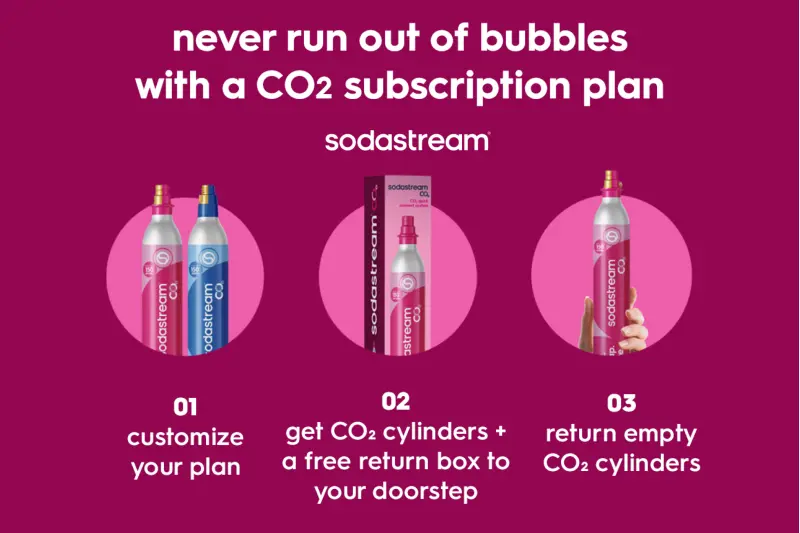
SodaStream's cylinder exchange program is one of its most underrated practical advantages for American shoppers. When a cylinder empties, you don't discard it — you bring it to a participating retailer and swap it for a full one at the exchange price ($14–$17), rather than paying $30+ for a new cylinder outright. The US exchange network spans tens of thousands of locations, making refills as routine as a grocery run for most urban and suburban households.
For households farther from retail exchange points, SodaStream offers a mail-in option through Amazon: purchase a new cylinder, return the empty in the included box with a prepaid USPS label, and receive an Amazon gift card credit within two weeks. Each returned cylinder is inspected, sterilized, and refilled with food-grade CO2 before going back into circulation. The system works reliably — provided you stay organized about tracking when your cylinder is running low, ideally by keeping one full spare on hand at all times.
How SodaStream Stacks Up on Sustainability
The plastic bottle reduction argument
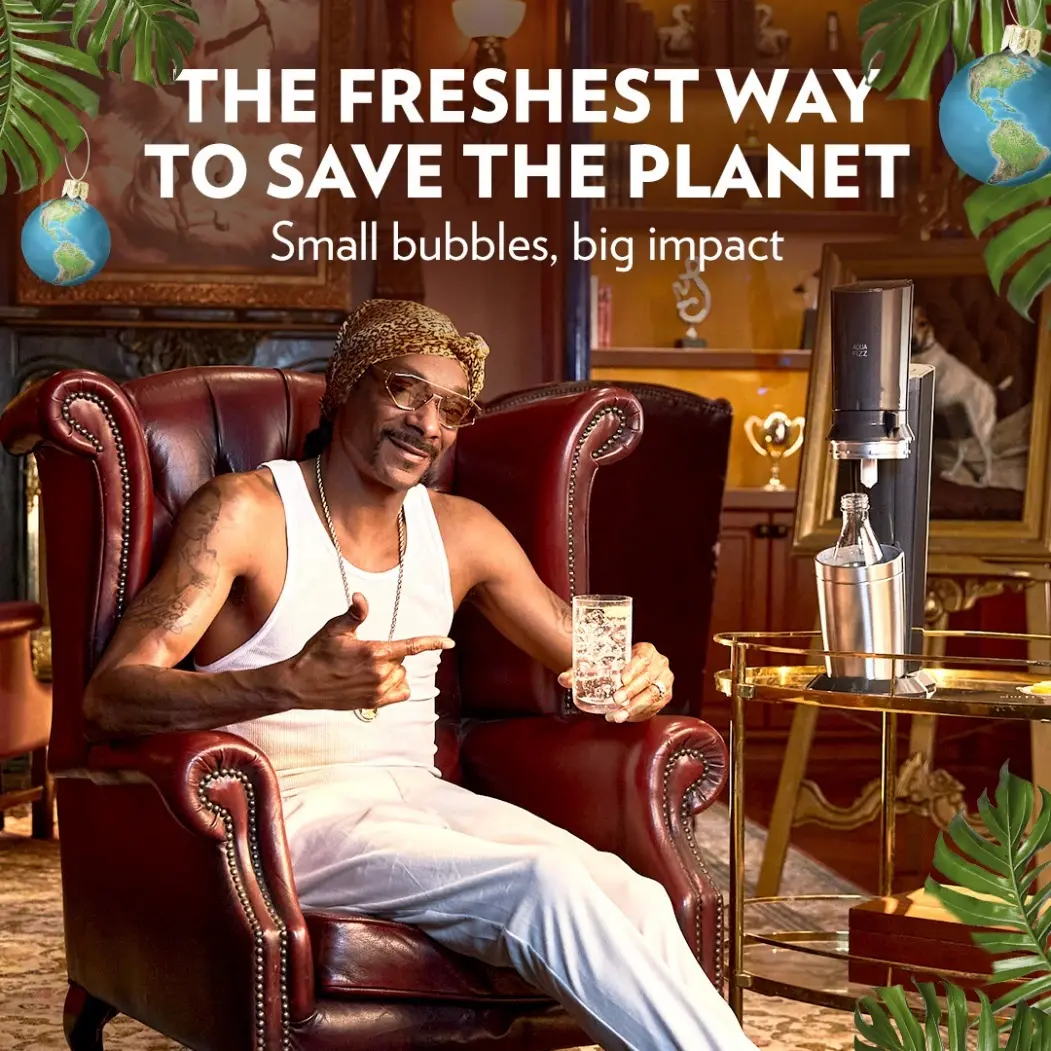
SodaStream's most compelling marketing message has always been environmental, and the data behind it is concrete. The brand reports that a single SodaStream reusable bottle, used consistently over its three-year lifespan, can eliminate the need for more than 1,000 single-use plastic bottles. Globally, SodaStream's user base collectively avoided the equivalent of approximately 5.5 billion single-use plastic bottles in 2023 — a figure documented in the brand's 2024 Earth Month press release as a PepsiCo subsidiary.
For the average American sparkling water drinker buying a case of 12 cans weekly, switching to SodaStream means eliminating roughly 600 plastic cans or bottles per year from personal waste output. At the household level, the impact is tangible and automatic — it happens as a byproduct of normal daily use rather than requiring any additional effort or behavioral change beyond the initial machine purchase.
The CO2 closed-loop system and SodaStream's broader commitments
Beyond plastic bottles, SodaStream's CO2 cylinder system operates as a closed loop. Returned cylinders are not discarded — they're sterilized, inspected, and refilled, making the cylinder itself a genuinely reusable component. The brand has had its flagship starter kits and cylinders certified as carbon-measured by the Carbon Trust, an independent sustainability organization, identifying where in the product lifecycle reductions are achievable.
PepsiCo's 2024 ESG report explicitly names expanding SodaStream as part of its reusable packaging strategy — significant context given that PepsiCo is simultaneously one of the world's largest producers of single-use plastic packaging. Whether that corporate backdrop adds or dilutes credibility to SodaStream's sustainability positioning is a reasonable question. At the product level, however, the reduction in household single-use plastic is real and measurable for any household using the machine regularly.
What the sustainability case doesn't cover
A complete environmental picture of SodaStream requires acknowledging what the brand doesn't always highlight. The CO2 used for carbonation is a greenhouse gas, and while cylinders are refilled rather than wasted, the industrial production and transport of food-grade CO2 has its own emissions footprint. The machines are manufactured primarily from plastic, adding to production-phase environmental costs. And the plastic bottle savings only accumulate for households that use their machine consistently over years — a machine that sits unused after the first month represents a net environmental cost, not a benefit.
None of that negates SodaStream's advantage over habitual store-bought sparkling water consumption. But the sustainability case is strongest — both environmentally and economically — when the machine is used heavily, consistently, and for as long as the hardware holds up.
How SodaStream Compares to Its Main US Competitors
SodaStream vs. Aarke: the most common comparison
The SodaStream-versus-Aarke debate comes up constantly among American buyers, and the honest framing is that it's a choice between different priorities rather than a performance difference. Aarke machines — particularly the Carbonator III at $200+ — are built from full stainless steel and widely regarded as the most visually refined home carbonators available. In independent testing, however, SodaStream consistently matches or outperforms Aarke models on fizz intensity and carbonation duration, particularly on the Art model. The price gap between a SodaStream Terra starter kit and a comparable Aarke setup buys aesthetics, not meaningfully better sparkling water. For buyers who see a kitchen appliance as a design investment, Aarke makes a genuine case. For everyone else, SodaStream wins decisively on value.
SodaStream vs. DrinkMate: the versatility question
DrinkMate's main differentiator is its ability to carbonate liquids beyond water — juices, wine, cocktails, and flavored drinks can all go into a DrinkMate, where SodaStream machines are officially designed for water only. For households specifically seeking a home carbonator for sparkling juice or fizzy wine, DrinkMate has a real functional edge. SodaStream counters with a deeper retail and exchange network, broader flavor integration through Bubly and Pepsi syrups, and stronger brand recognition that translates into easier cylinder access across the country. For sparkling water as the primary use — which represents the vast majority of American home carbonation use — SodaStream remains the stronger overall choice.
Tips for Getting the Most Out of SodaStream in the US
Best practices for better carbonation results
SodaStream machines perform measurably better with cold water than room-temperature water. Cold water absorbs CO2 more efficiently, producing stronger, longer-lasting carbonation from the same cylinder. Chilling bottles in the fridge before carbonating — especially on the Art, where the lever gives granular control over CO2 injection — produces noticeably better fizz than carbonating ambient water. Pre-chilling also reduces the risk of pressure buildup when you open the bottle after carbonating.
On button-operated models like the Terra, the standard technique is three to five firm presses to build carbonation, pausing to listen for the slight hiss that signals CO2 is diffusing into the water. Releasing pressure slowly before removing the bottle prevents the rush of foam that frustrates first-time users. Always fill only to the marked fill line on the bottle — not to the brim — to leave room for the carbonation process to work without overflow.
How to reduce ongoing costs on cylinders and syrups
The most effective way to control SodaStream's running costs is consistent use of the cylinder exchange program. Buying a new cylinder outright at $30+ instead of exchanging an empty for $14–$17 effectively doubles per-liter CO2 costs. Keeping one full spare cylinder in reserve means you're never caught empty and forced to buy new in a rush. Retailers like Costco periodically offer multipack cylinder deals that lower the per-unit cost further for households that plan ahead.
On flavoring, official SodaStream syrups are priced for convenience, not thrift. Many regular users find that natural additions — a squeeze of fresh lemon or lime, a sprig of mint, a splash of 100% juice — produce more satisfying drinks at a fraction of the syrup cost. The Bubly drops line ($5.99 for 9 liters of finished drink) offers a reasonable middle ground for flavor without added sugar or significant cost impact.
Common mistakes first-time SodaStream owners make in the US
New SodaStream owners in the US tend to run into the same frustrations, and most of them are easily preventable. Using room-temperature water is the single most common error — it produces weak, short-lived carbonation and leads buyers to incorrectly conclude their machine is underperforming. Overfilling the bottle past the marked fill line is the second most frequent mistake, creating pressure that erupts messily when the cap is removed. Third, many buyers don't plan their cylinder exchange logistics before purchasing — if the nearest exchange location is inconvenient, the friction of managing refills steadily erodes the habit. A few minutes spent confirming your nearest exchange point before buying will save considerably more frustration later.
Final Thoughts: Is SodaStream Worth It for US Households in 2025?
SodaStream's standing in the American market in 2025 is more solid than at any point in the brand's history. The product lineup is genuinely well-calibrated, the cylinder exchange network is mature and geographically broad, and the economic case for consistent sparkling water drinkers is clear and mathematically sound from the first year of ownership. The most important factor any potential buyer needs to assess honestly is their own consumption pattern. For households that drink sparkling water daily — or anything close to it — the Terra or Art starter kit will pay for itself within months, deliver long-term savings against store-bought alternatives, and eliminate hundreds of single-use plastic bottles per year as a byproduct of normal routine. For light or occasional sparkling water drinkers, the economics are softer and the machine carries a real risk of becoming an attractive piece of counter clutter. For the right household, SodaStream in 2025 is not a novelty purchase or a lifestyle statement. It's a practical, well-supported home appliance that does exactly what it promises, every time someone presses the button or pulls the lever. And for most Americans who take their sparkling water habit seriously, that's more than enough.
.jpg_1773702916.627_ee95d5797c_fullsize.jpg)