

.jpg_1759869177.3989_9564518c87_fullsize.webp)
.jpg_1758051740.5057_0ad83a0b80_fullsize.webp)
Published Jun 29, 2026
15.884K
Viagogo vs StubHub and Other Ticket Resalers: Which Should You Use in 2026?
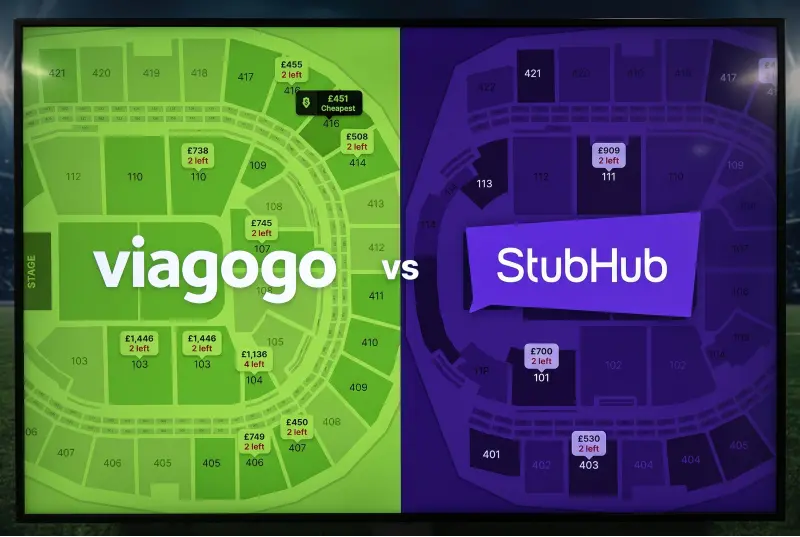
The secondary ticket marketplace has evolved dramatically over the past decade. What was once a fragmented ecosystem of shady classified ads and sketchy fan forums has matured into a multi-billion-dollar industry dominated by a handful of global platforms. If you're hunting for event tickets that have sold out through official channels, choosing the right resale platform can mean the difference between a great night out and a highly expensive disappointment.
The Landscape: Primary vs. Secondary Ticket Markets
Before comparing platforms, it's vital to establish the baseline rules of the market:
- The Primary Market: Tickets sold directly by venues, promoters, or official ticketing partners (Ticketmaster, See Tickets, AXS, Eventim). These are always sold at face value without resale markups. This should always be your first stop.
- The Secondary Market: Peer-to-peer or broker resale (Viagogo, StubHub, SeatGeek). Prices fluctuate purely based on supply and demand. For high-demand events, expect to pay a heavy premium; for less popular events close to the show date, you can occasionally secure tickets below face value.
Market Overview: Quick Comparison Table
| Core Strength | Average Buyer Fees | Pricing Model | Best For | |
| Viagogo | Unmatched global inventory (160+ countries) | 15% – 30%+ | Uncapped market pricing | Sold-out international concerts & sports |
| StubHub (US) | Powerhouse for North American events | 20% – 30% | Uncapped market pricing | US sports (NFL, NBA, MLB) and mega-tours |
| Ticketmaster Resale | Maximum security (instant verified transfer) | Variable | Uncapped, but venue-regulated | Pure peace of mind on Ticketmaster events |
| TicketSwap | Fairest consumer protection and prices | ~10% (7% fee + 3% txn) | Strict price caps (0% – 20% max markup) | European festivals and club events |
| SeatGeek | Outstanding visual interface and transparency | 20% – 25% | Uncapped (All-in pricing displayed upfront) | Visual seat mapping for US events |
Viagogo: Strengths and Weaknesses
Viagogo's defining advantage is its sheer, brute-force scale. As an international secondary marketplace, it operates across more than 160 countries. Its inventory is completely unmatched in breadth, aggregating music, sports, theater, and festivals from independent sellers worldwide into a single searchable interface.
For travelers or expats looking to attend events outside their home country, Viagogo is a massive asset. Instead of wrestling with unfamiliar foreign ticketing systems in languages you don’t speak, you can transact in your native language and currency.
The Downsides: Viagogo's fee structure is consistently among the highest in the business. On top of steep seller markups, buyer fees frequently hit 15% to 30% at checkout. Additionally, the platform has faced historical regulatory scrutiny regarding transparency, and customer service remains a frequent point of contention in user reviews.
StubHub: Viagogo's North American Sibling
StubHub shares a corporate parent with Viagogo under StubHub Holdings, which officially completed its public IPO in September 2025 (trading on the NYSE under the ticker symbol STUB).
However, there is an important geographic caveat to keep in mind:
- In North America: StubHub is a dominant market force, deeply integrated with major sports leagues (NFL, NBA, MLB) and massive US concert stadium tours.
- Internationally: Due to historic antitrust rulings by the UK Competition and Markets Authority (CMA), StubHub's international branches were forced to split off into a separate company called StubHub International. Consequently, for events outside the US and Canada, Viagogo serves as the primary global platform for the parent entity.
StubHub US utilizes a "FanProtect" guarantee broadly identical to Viagogo's, and buyer fees track similarly at around 20% to 30%. For domestic US events, it remains one of the most reliable user experiences available.
Ticketmaster Fan-to-Fan Resale
Ticketmaster has leveraged its dominance as a primary ticket issuer to build an incredibly secure fan-to-fan resale function right within its own closed ecosystem. When a ticket holder chooses to resell their ticket directly through Ticketmaster, the platform cancels the original barcode and issues a brand-new, unique barcode to the buyer.
- The Pros: This entirely eliminates the risk of counterfeits, duplicate tickets, or malicious sellers. It is arguably the safest way to buy a resold ticket in existence.
- The Cons: Inventory is strictly limited. You will only find tickets that original Ticketmaster buyers have chosen to list back onto the platform. If an event is heavily sold out and options are scarce, you will generally find a far wider pool of sellers on open platforms like Viagogo.
TicketSwap: The Fee-Capped Alternative
TicketSwap is the anti-scalping alternative of the resale world. It operates on a strict ethical foundation designed to prevent professional ticket brokering and price gouging.
Sellers on TicketSwap are globally capped at a maximum markup of 20% above the original face value. Furthermore, in specific countries with strict legal resale regulations (such as France, Belgium, Denmark, and Poland), TicketSwap caps the resale price at 100% of face value, meaning sellers are legally barred from making any profit.
With total platform fees hovering at a modest 10% (a 7% service fee plus a 3% transaction fee), TicketSwap is incredibly cost-effective. The obvious trade-off is supply: it is heavily focused on European festivals and mid-tier club/concert venues. For massive, high-demand global stadium events, getting a ticket here requires competing against thousands of other users via rapid-fire notifications.
SeatGeek: The Transparent Alternative for US Buyers
SeatGeek has won over a massive section of the US market by prioritizing visual design and extreme transparency. The platform aggregates secondary listings and maps them onto clean, interactive venue layouts using a proprietary "Deal Score" system. This system analyzes historical data to tell you whether a specific seat is a great deal or heavily overpriced.
Critically, SeatGeek allows you to toggle "All-In Pricing" from the very start of your search. This means the 20% to 25% buyer fees are built right into the map view—no unexpected price spikes at checkout. Like its peers, SeatGeek's international footprint is relatively small, making it an excellent choice for US events but a weak substitute for Viagogo globally.
Which Platform Should You Choose?
- Choose Viagogo if: You are traveling abroad, buying tickets for an international event, or looking for the absolute maximum volume of available tickets for a heavily sold-out show.
- Choose StubHub if: You are located in North America and looking to buy tickets for major domestic sports leagues or arena concert tours.
- Choose Ticketmaster Resale if: Security is your absolute number-one priority and you want 100% guaranteed entry without relying on third-party platform mediation.
- Choose TicketSwap if: Your event is in Europe (especially UK/Western Europe) and you are highly price-sensitive and want to avoid massive markups.
- Choose SeatGeek if: You are a US buyer who wants an excellent visual layout to compare seat quality vs. price without checkout surprises.
Conclusion: Viagogo in Context
Viagogo is best understood not as a universally perfect or flawed site, but as a high-powered tool with a specific niche: providing access to the broadest possible pool of global tickets when all official avenues have failed.
The cost of utilizing this scale is high—the fees are undeniably steep. However, for buyers who understand the marketplace rules, cross-compare with alternatives, and use secure payment methods like credit cards or PayPal, Viagogo delivers exactly what it promises: a reliable seat at the table for the world's most sought-after live experiences.
Affiliate Disclosure: This article contains affiliate links to the Viagogo platform. If you click on these links and choose to register or make a purchase, we may earn a referral commission. This commission comes at no additional cost to you and supports the ongoing research and publication of high-quality e-commerce and lifestyle content. All opinions and recommendations remain strictly our own.