



.jpg_1759869177.3989_9564518c87_fullsize.webp)


.jpg_1758051740.5057_0ad83a0b80_fullsize.webp)
Published Apr 08, 2026
14.663K
The One Thing Every International Student in Europe Gets Wrong in the First
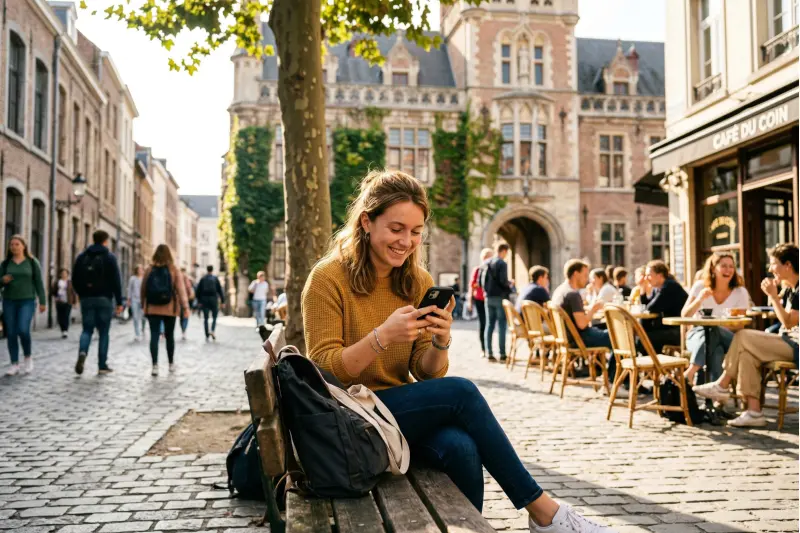
Tuition, rent, groceries — you budgeted for all of it. But there's one expense that quietly drains your wallet before you even find your lecture hall. Here's what to do instead.
You've done everything right.
You applied early, got accepted, found a place to live, packed your bags, and flew thousands of miles to start a new chapter in Europe. You have a spreadsheet. Maybe two. You know your monthly rent, your rough food budget, even how much you'll spend on coffee.
And then, three weeks in, your bank sends you a notification.
It's not rent. It's not groceries. It's your phone bill — and it's two, sometimes three times what you expected.
Welcome to the club. Almost every international student in Europe goes through this in their first month. Not because they're careless. Because nobody actually warned them.
The spreadsheet always has a gap
Before you move abroad, people give you a lot of advice. Your university sends you a cost-of-living breakdown. Your parents remind you to save. Travel forums are full of threads about cheap supermarkets and student discounts on museum tickets.
But mobile connectivity? It falls through the cracks every single time.
And here's why it matters more than people realize: your phone isn't just for scrolling Instagram at 2am. In a foreign country, it's your map, your translator, your bank authenticator, your lifeline to family back home, and your main way of coordinating with new classmates you've known for six days.
When your phone stops working — or starts costing a fortune — everything gets harder. Fast.
The three mistakes most students make
There's usually a pattern. It goes one of three ways.
Mistake #1: Relying on your home SIM with roaming
This seems like the path of least resistance. You land in Amsterdam or Barcelona or Warsaw, and your phone still works — texts come in, Google Maps loads, you feel fine. Then the bill comes. Roaming charges across Europe can be brutal depending on your home country and carrier. Some students from outside the EU are looking at €0.20–€0.50 per MB of data, without even realizing it. A single afternoon of navigating a new city can cost more than dinner.
Mistake #2: Buying a local SIM in the airport
Smart instinct, wrong execution. Airport SIM cards are almost always overpriced. You're paying a convenience premium at the worst possible moment — when you're jet-lagged, disoriented, and just want your phone to work. The plans are often short-term, the data limits low, and the prices quietly inflated. You'll overpay and probably switch within a month anyway.
Mistake #3: Assuming Wi-Fi is enough
Some students decide to just "use Wi-Fi" and figure it out. This works fine in theory, and for the first 48 hours in your apartment, maybe it does. But real life doesn't happen in your apartment. It happens in transit, between campuses, in cafés that don't have Wi-Fi, at administrative offices where you need to show a confirmation email and suddenly have no signal. Europe is well-connected, but it's not seamlessly connected everywhere, and betting your entire semester on free Wi-Fi is a gamble that usually loses.
What actually works: a SIM built for people moving across borders
Here's what experienced expats and long-term international students eventually figure out — usually after losing some money first.
You need a SIM card that's designed for people who live across borders, not just visit them.
That's a different product category than a tourist SIM or a local contract. Tourist SIMs expire. Local contracts often require a local address, a local bank account, sometimes a residency permit you don't have yet. Neither of those works well for a student who's been in the country for three weeks and is still figuring out how to register at the town hall.
This is exactly the gap that Lycamobile fills — and fills well.
Why Lycamobile makes sense for students specifically
Lycamobile operates across 25+ countries in Europe, which immediately makes it different from any single-country local operator. Whether you're based in Germany and visiting friends in Prague, or studying in the UK and going home for the holidays, your SIM doesn't become useless at the border.
For students, that flexibility is underrated. Your life during a degree program isn't stationary. There are exchange semesters, weekend trips, conference visits, family back home. A SIM that works across Europe without penalty isn't a luxury — it's a practical necessity.
Beyond coverage, the plans are genuinely competitive. Lycamobile offers prepaid options with no long-term contracts, which is exactly what you want when your situation is inherently temporary and changing. No 24-month commitments. No cancellation fees. No awkward calls to customer service explaining that you're leaving the country.
International calls — often the real hidden cost for students who need to stay in touch with family — are included or deeply discounted depending on the plan. That's not a small thing. A 30-minute call home every week adds up fast on a standard plan. With Lycamobile, it's built in.
And the setup is straightforward. No local credit history required, no complicated registration hoops. You can get started quickly, which matters when you land in a new country and need your phone to work today, not after a two-week approval process.
The math is simple
Let's put rough numbers on it, because students think in budgets.
A typical roaming scenario for a non-EU student using their home SIM in Europe: €40–80/month, depending on usage, with unpredictable spikes.
An airport SIM: €25–40 for a short-term plan that runs out faster than expected and needs topping up constantly.
A Lycamobile prepaid plan in most European markets: starting from €10–15/month for basic plans, scaling up reasonably for more data. International calls included. Coverage across Europe.
The math isn't close. You're not just saving money — you're buying predictability, which for a student managing a tight budget is arguably more valuable.
One more thing nobody talks about
There's a psychological cost to connectivity problems that doesn't show up in any spreadsheet.
When your phone doesn't work reliably, you feel more isolated. That's not dramatic — it's just true. Moving to a new country is already disorienting. You're building a new social circle from scratch, navigating bureaucracy in a language you may not speak fluently, and doing all of this while keeping up with coursework. Your phone is one of the few constants. When it becomes unreliable or expensive, it adds a low-grade stress to everything else.
Getting your connectivity sorted early — properly sorted, not just patched together — removes one variable from a semester that already has too many.
The bottom line
The first month in Europe will throw things at you that no spreadsheet could predict. Some of them you can't control. But your phone bill? That one's fixable.
Don't wait until you get the first surprise charge. Don't rely on roaming or overpriced airport SIMs. Find a plan that's built for the way international students actually live — across borders, on a budget, with family back home and a life spread across multiple countries.
Lycamobile isn't the most exciting product recommendation in the world. But it's one of the most consistently useful ones for students landing in Europe. Sometimes the boring, practical choice is just the right one.
Sort your SIM before you sort everything else. You'll thank yourself by week three.
Want to see if Lycamobile is available in your country and check current plans? Head to their site and find the option that fits your semester.